
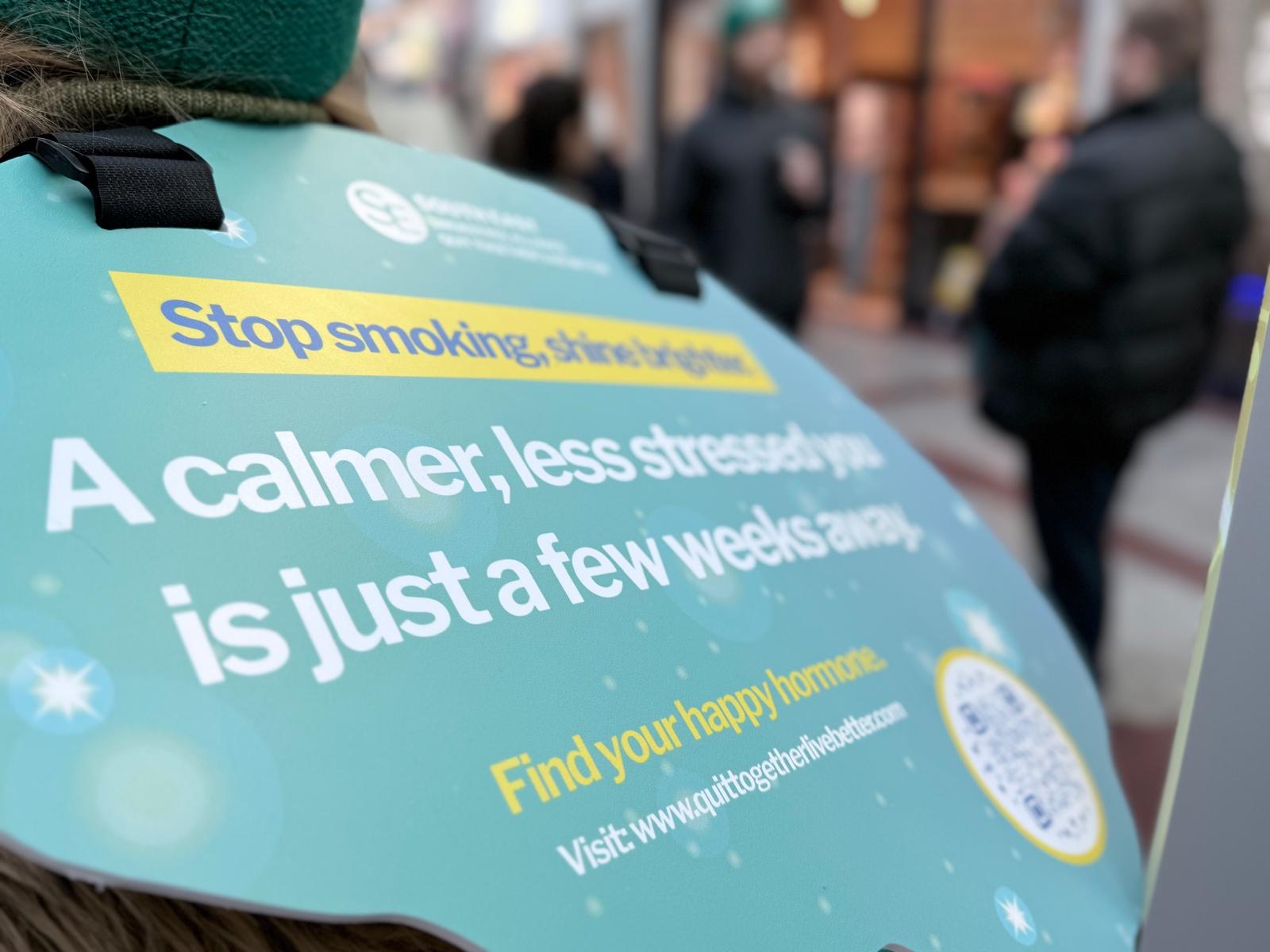
Eski has worked with South East Smokefree Alliance (SESA) to develop a new regional campaign to dispel a common myth about smoking as a way of relieving stress and ask what makes the South East happy?
Members of SESA will be out and about across towns and cities throughout January and February to spark conversations about wellbeing, and the link between quitting smoking and feeling better.
The campaign is built on growing evidence that stopping smoking doesn’t just improve your physical health, it can also make you happier. Within weeks of quitting, people’s brains start to rebalance dopamine, the “happy hormone” that smoking suppresses us creating naturally.
The programme includes engagement events and a mass media campaign funded by 18 councils in the South East of England that explains in simple terms how quitting allows the brain to produce dopamine naturally again, helping people feel calmer, brighter and less stressed within weeks. Advertisements will be running across TV, radio, and online with positive messages for smokers on the benefits of quit smoking as well as showing people how to access support services available.
A series of films and animations explain how “smoking steals our happiness” with visual illustrations about how smoking tricks the brain into short-term stress relief, while draining long-term joy and resilience.
Stop Smoking, Feel Happier forms part of SESA’s wider mission to make the South East a smokefree region by 2030. Over 846,000 adults in the South East still smoke, costing thousands of lives every year and deepening health inequalities, particularly among people with mental health challenges and those in manual or routine jobs.
The Alliance’s work is grounded in behavioural science, aiming to reshape public understanding of smoking and stress.
Dr Sarah Milne, Lead of the South East Smokefree Alliance, said:
“So many people believe smoking helps them cope with stress, but the truth is the opposite. Nicotine tricks your brain into thinking you need it to feel calm, when in fact it’s stealing your happiness and resilience.
Within weeks of quitting, your brain starts to heal and your mood lifts naturally. The campaign brings together 18 councils covering a population of over 9 million people to remind people that brighter moods and calmer minds are within reach, and that quitting smoking is one of the most powerful steps you can take to feel better.”
Dr Milne, whose research into motivation and behaviour change has been featured in the global bestseller Atomic Habits, added:
“This campaign is about hope, positivity and connection. We recognise that people have other stresses and challenges in their lives though the evidence is clear that if you are receiving support for a mental health problem or major challenge, quitting smoking can help you through this.”

Comments are closed.